

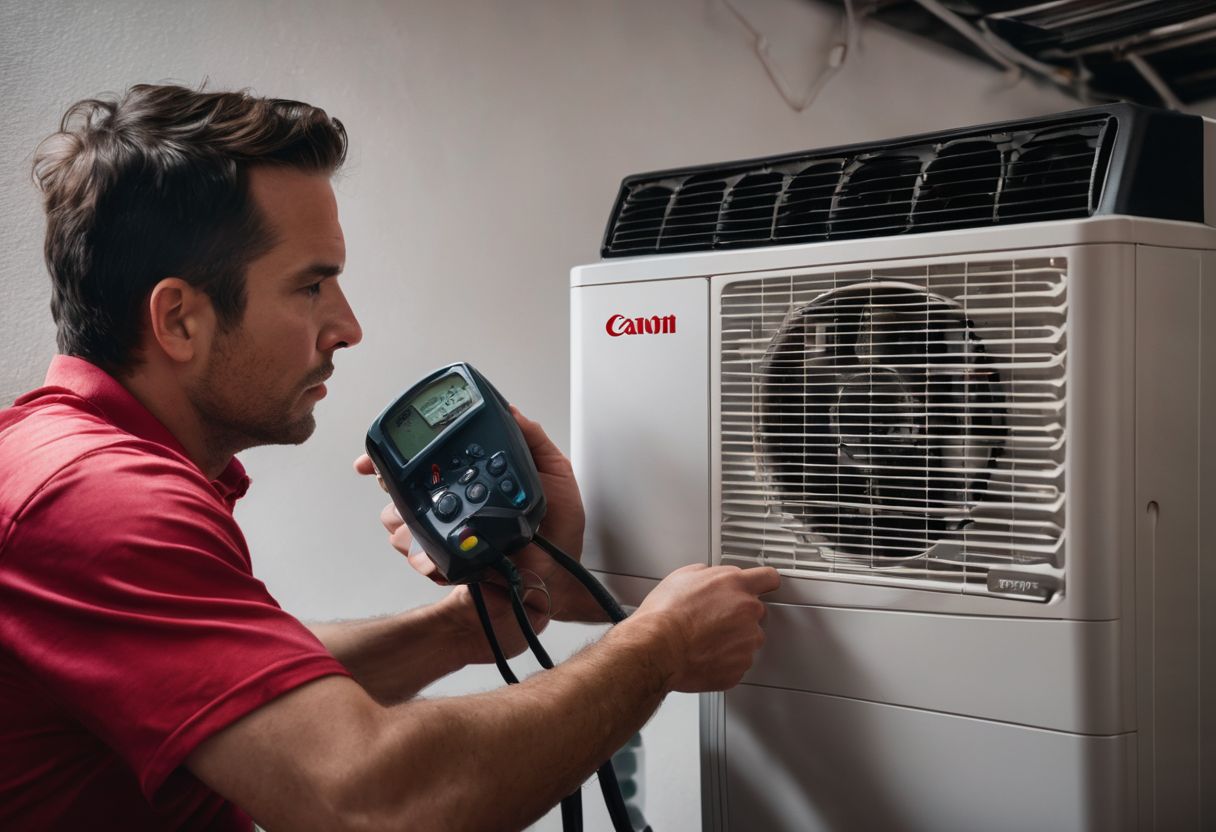
Aircon condensation is when water drops form on your air conditioner. This happens because the air gets too cool and wet. Sometimes, it’s because the hot air outside meets the cold parts inside your AC.
There are a few main reasons this happens, like not having enough insulation or making mistakes when installing your AC.
Knowing why it occurs helps us fix it. For example, we can slowly make the air that comes out colder or move more air through to stop sweat on our systems. Also, using things that take moisture out of the air can help a lot.
It’s important to keep certain pressure inside by balancing how much fresh and used air moves around. In places with low pressure, we need to seal windows and doors well so humid air doesn’t get in and create water drops.
Choosing the right stuff to keep heat away from your AC system also stops condensation problems. If you see signs of trouble with your AC sweating, fixing them quickly is good for keeping everything working well.
H & H Heating & Cooling can help if you have issues with water drops in your HVAC systems.
This all matters because if we don’t deal with these problems early on, they could hurt our AC units badly over time. Let’s look closer at what causes wetness in our machines and how to spot warnings that mean you might need an expert’s touch!
Understanding Aircon Condensation
Understanding Aircon Condensation delves into the mechanics of moisture formation within air conditioning systems, exploring how conditions conducive to water vapor converting into liquid manifest.
This section will unravel the complex interplay between temperature, relative humidity, and air flow that leads to condensation in both residential and commercial HVAC units.
The Science of Condensation in Air Conditioning Systems
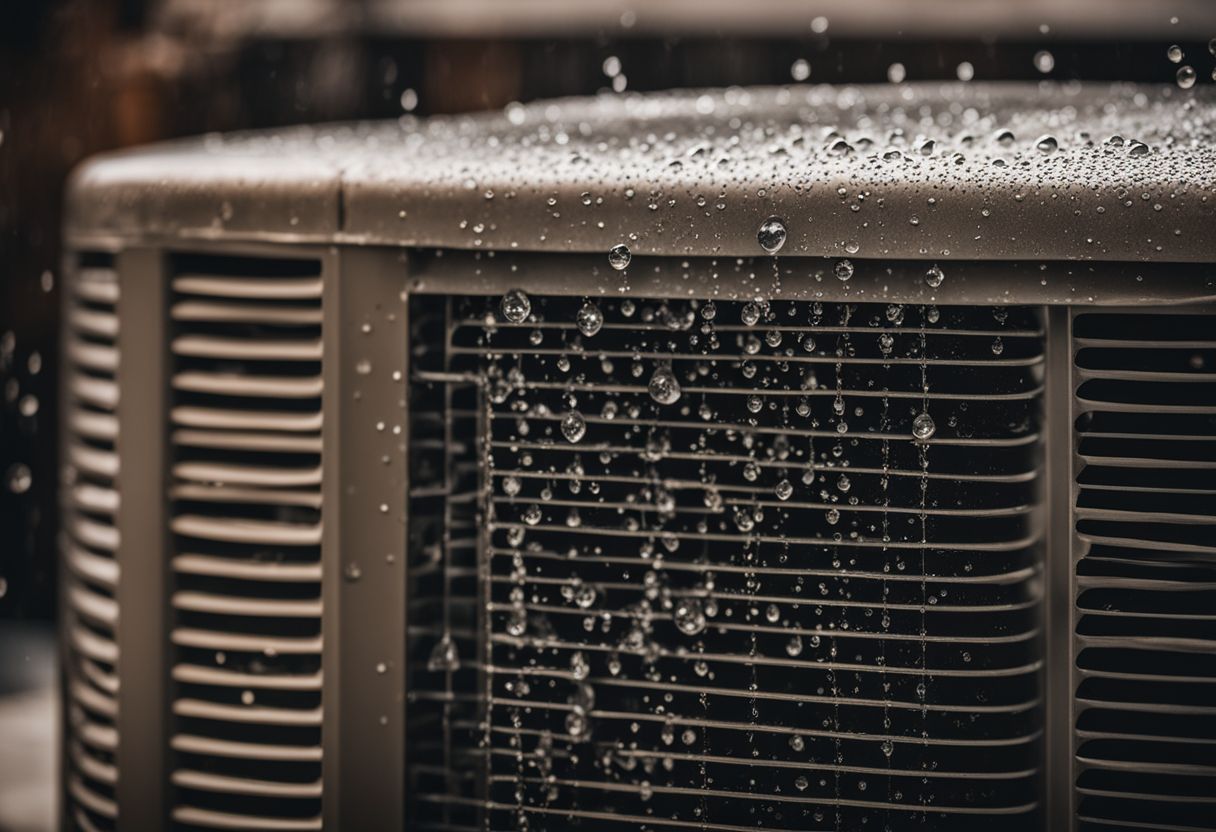
Air conditioners work by moving warm air from inside your house to the outside. This happens when the warm inside air blows over a cold surface called the evaporator coil. The cooling down of this air makes water vapor in it turn into liquid, which we call condensation, just like on a cold glass of water on a hot day.
In an air conditioning system, this liquid needs to go somewhere. That’s why there are pipes that take this water out of your house so it doesn’t get things wet. But if something goes wrong – like if these pipes are blocked or there is too much moisture in the air – you can end up with too much water and it might start dripping inside instead of going outside where it should.
Identifying the Culprits of Aircon Condensation
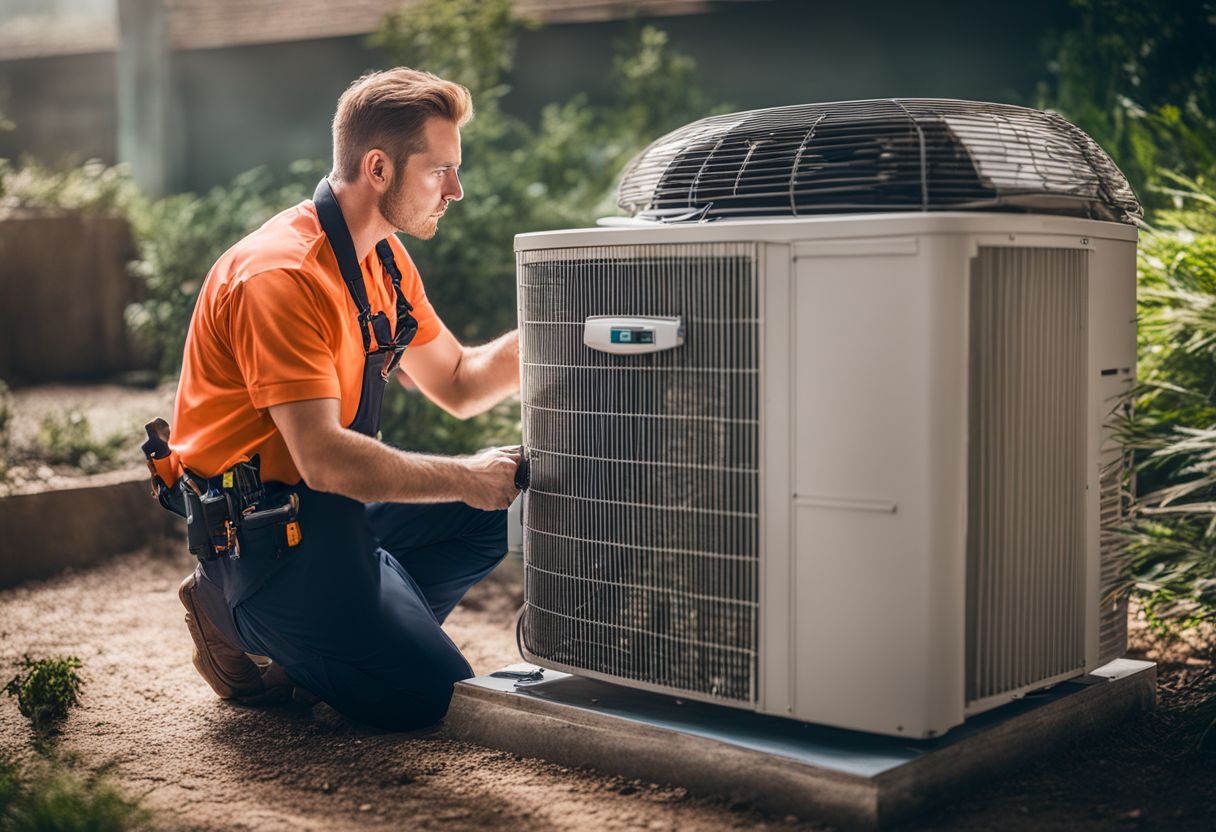
3. Identifying the Culprits of Aircon Condensation: To unravel the mysteries behind excessive condensation in your air-conditioning system, it is crucial to delve into the key factors that contribute to this phenomenon, ensuring an efficient and effective solution can be found.
Poor Insulation and Installation Errors
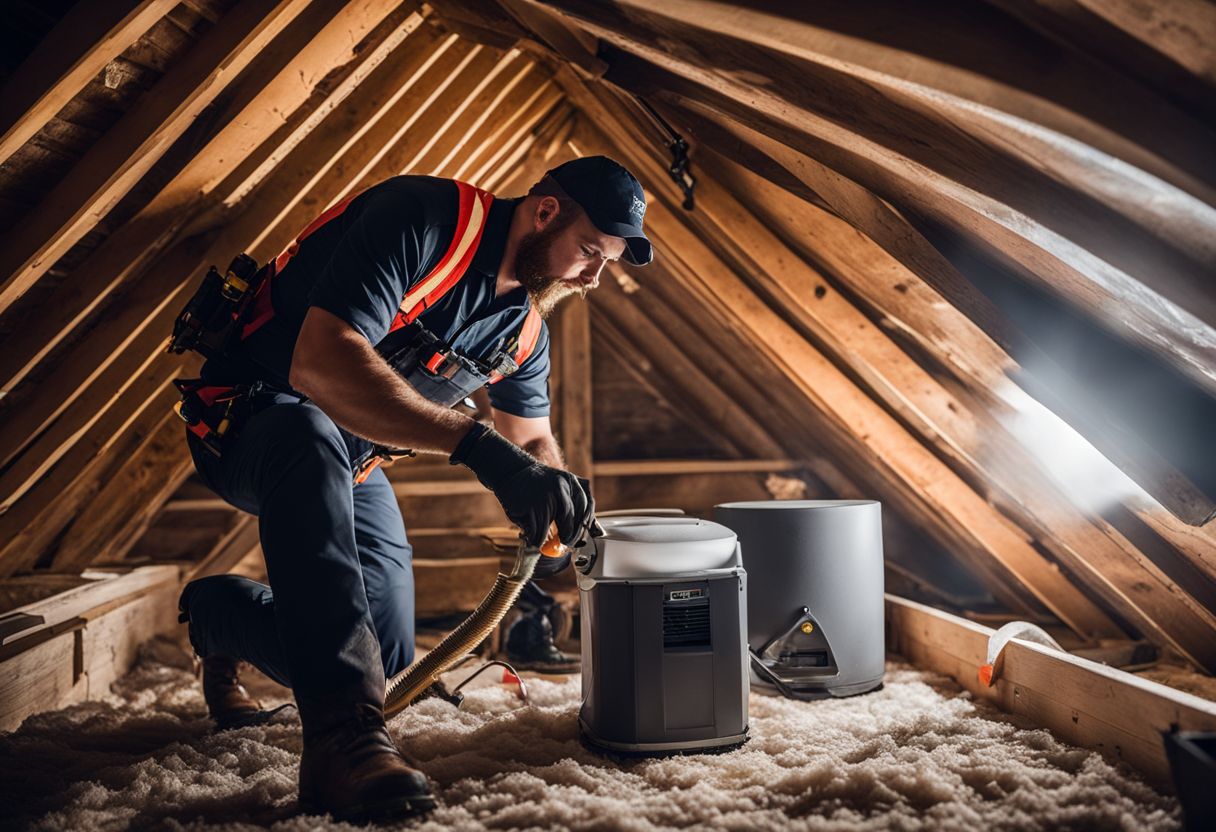
Bad insulation can make an aircon sweat too much. If a roof doesn’t keep the heat out well, water vapour in the warm air turns to liquid on cold surfaces inside. This happens when hot, damp outside air hits parts of the cooling system.
Installation mistakes can also cause problems. To avoid this, good airflow within the system is key.
Choosing the right materials for keeping things warm or cool is very important. Bad choices here lead to extra moisture building up where it shouldn’t be. Making sure these materials are calculated accurately helps stop condensation from happening.
It’s all about not letting warm and wet air come into places it could cause trouble.
Environmental Factors and Maintenance Issues
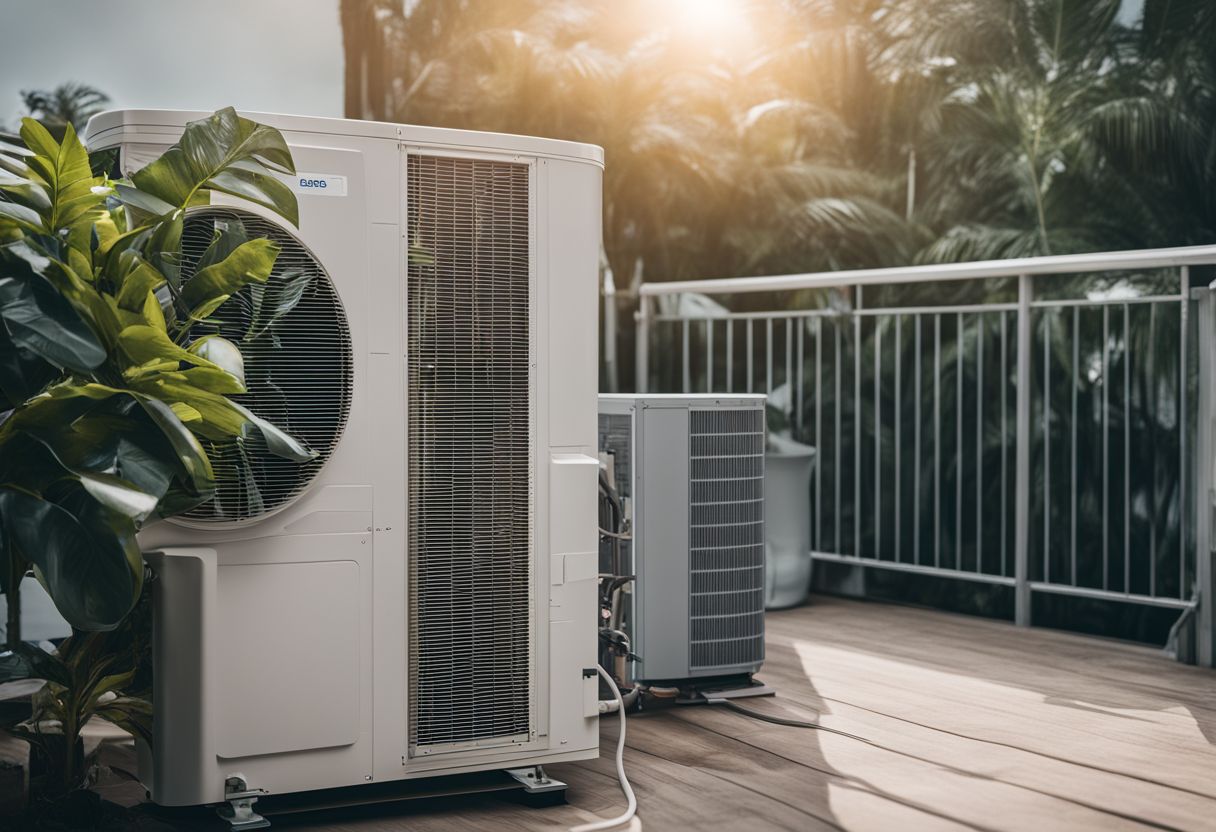
Air humidity and hot weather can lead to water vapours in the air turning into liquid on cold surfaces. This often happens inside air conditioning systems. To stop condensation, we need to keep humid outside air away from cool system parts.
For example, if you have an a/c in the basement, which is often damp, this can be tricky.
Keeping your hvac system working well also helps stop condensation. You must clean or change air filters regularly to let air flow freely through the system. Make sure fans and coils are dust-free too.
Check that all parts of your heating and cooling units work as they should. By taking care of these things, you help prevent unwanted water from forming inside your AC unit.
Signs Your AC Needs Professional Attention: Warning Flags
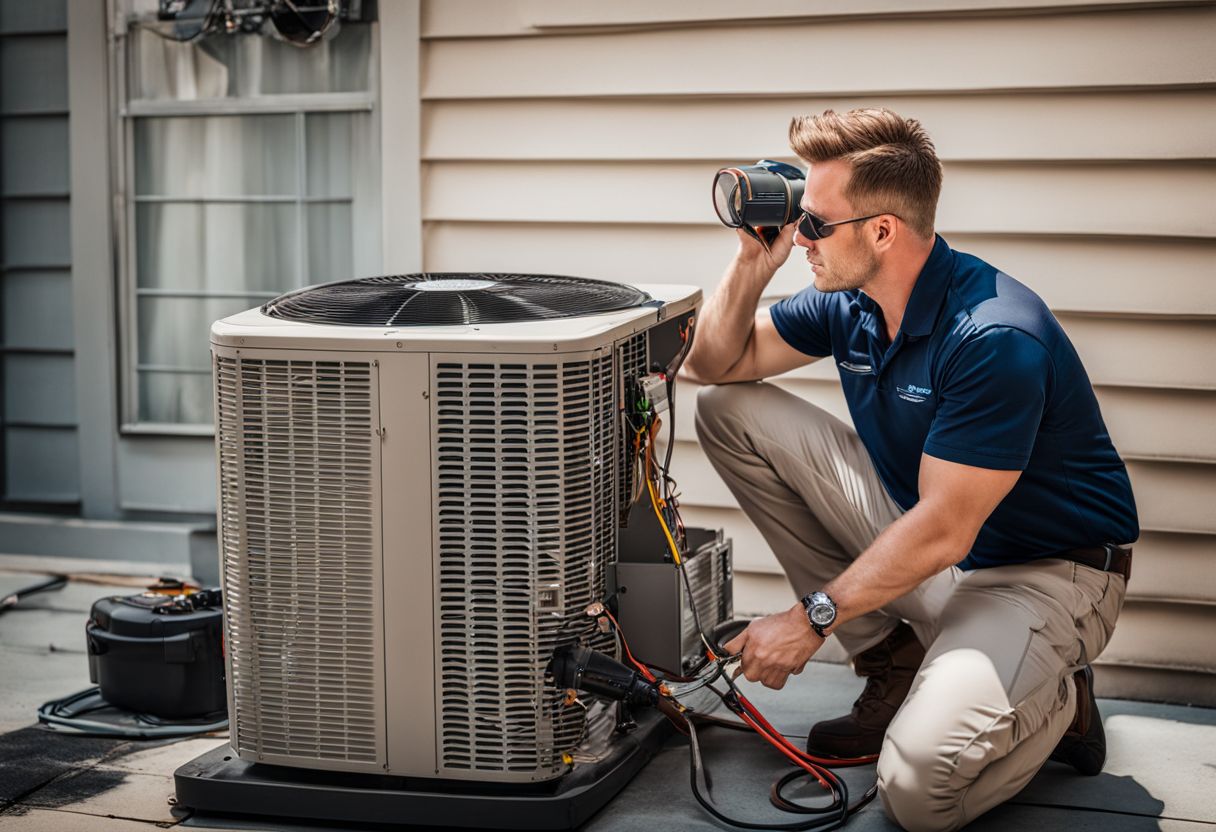
Your AC unit works hard to keep your home cool. But sometimes, it may show signs that it needs help from a pro. Here are some warning flags:
- Your AC leaks water. This could mean the system’s pipes or drain pan is blocked.
- Ice builds up on the AC coils. Poor airflow or low refrigerant can cause this.
- The AC makes strange noises. Banging, hissing, or whistling sounds can signal trouble inside the unit.
- Air flow from the vents is weak. This might be due to a problem with the fan or ducts.
- The thermostat isn’t working right. If your room feels too hot or cold, the thermostat might need fixing.
- Bad smells come from your AC. Musty odors could point to mold in the system, while a burnt smell may indicate an electrical issue.
- Your energy bills are getting higher without reason. A damaged AC might use more power to try to keep up with your cooling needs.
- The air inside feels too humid. An AC in good shape should remove moisture from the air, keeping it comfortable.
Conclusion
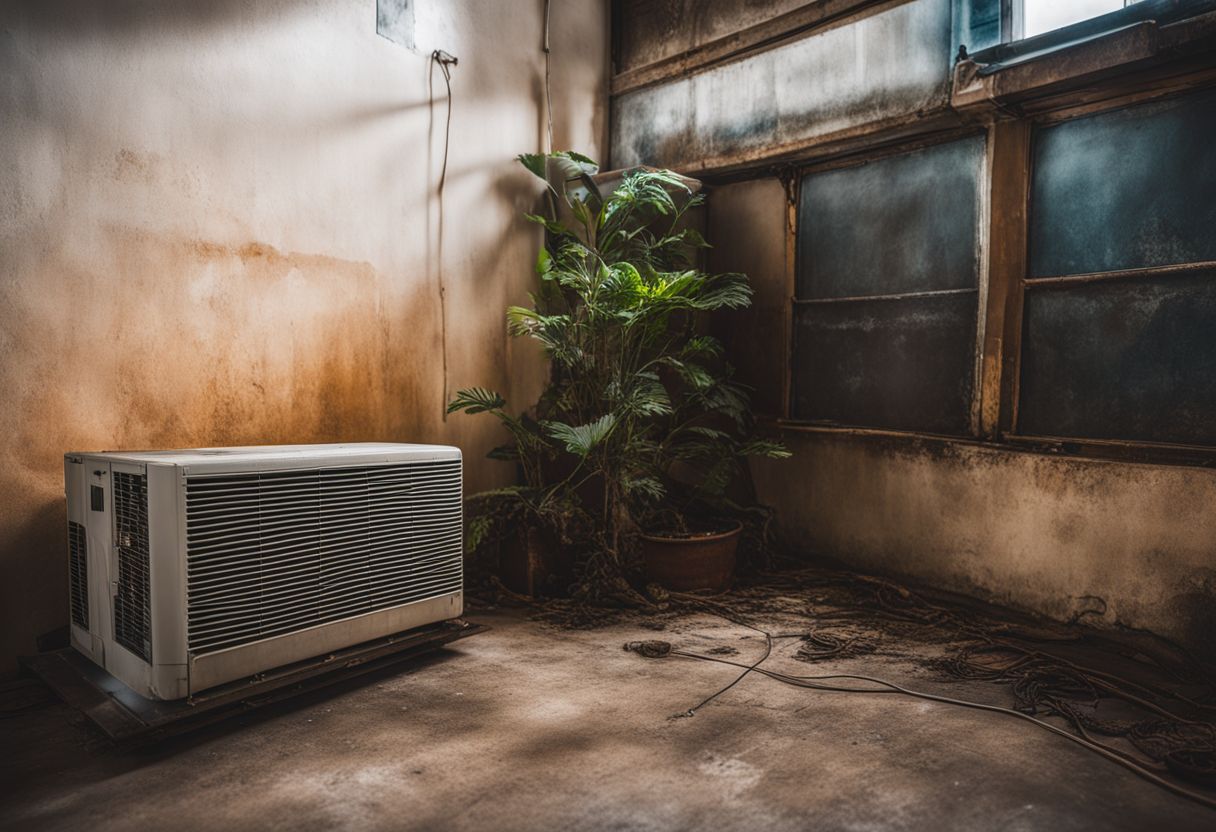
Let’s look at what we’ve learned about aircon condensation. We found out that things like bad insulation, wrong installation, and not enough airflow can cause problems. Keeping the air dry and making sure hot, wet air stays out are key to stopping condensation.
It’s smart to get help if you see warning signs like dripping water or odd smells from your AC.
Following these tips should keep your system working well. They’re easy to use and really do help. Tackling these issues quickly will save your AC from harm.
If you want to learn more, there are many guides that go deeper into this topic. Taking care of your AC is important for a comfy home. Remember, staying on top of AC care keeps it running smoothly for years.
If you’re noticing any unusual issues with your aircon, it’s worth reading up on the warning flags that indicate your AC needs professional attention.
FAQs
1. What causes condensation in air conditioning systems?
Condensation in air conditioning systems happens when water vapors in the ambient air cool down and turn into liquid on cold surfaces within the system, like fan coil units or air ducts.
2. How does thermal insulation affect condensation levels?
Good thermal insulation helps reduce heat transfer between surfaces and the air, which can lower condensation by keeping parts of the ventilation system from getting too cold.
3. Can dehumidifiers stop my aircon from leaking water?
Dehumidifiers reduce moisture in the air, leading to less evaporation and therefore helping to prevent excess water forming through condensation within your home’s ventilation system.
4. Why do basements often have problems with condensation?
Basements can be cooler and often contain conduits or electrical cables that are prone to becoming a heat sink, making them more likely for water vapor to cool quickly and condensed on these surfaces.
5. Is it possible for thermoelectric cooling to handle condensation effectively?
Thermoelectric cooling, which uses a change in temperature caused by an electric current passing through two different materials, can help manage heat transfer coefficient efficiently; this means controlling how much warm moist air hits a cooler surface and could thereby play a role in tackling unwanted condensation.