


Keeping your air conditioner clean is key to a cool and healthy home. Smart aircon cleaning means knowing when to do it and how to use the right tools. If your AC has dirt, you might notice less cold air, strange sounds, or bad smells.
Cleaning can cut down on energy bills and make your unit last longer.
Some companies like Hitachi use special FrostWash technology that cleans itself. But even with this tech, you still need regular check-ups for things like filters every month or each year.
You’ll want tools such as vacuum cleaners and soft brushes for careful cleaning without damage. And remember to turn off the power first!
It’s smart to figure out how often your AC needs cleaning based on how much you use it or if you have pets at home. Doing the job yourself can be great but sometimes calling in a pro is best.
Clean ACs work better and save money in the long run.
Let’s get started on making sure yours does just that!
Recognising Signs of a Dirty Air Conditioner

Recognising the symptoms of a filthy air conditioner is crucial to maintaining its efficiency and longevity. Ignoring these indicators can lead to decreased performance, higher energy costs, and potential health issues due to poor air quality.
Physical signs

Dust and dirt on your air conditioner are signs it’s time for a clean. If you see grime on the vent, or if filters look clogged, don’t ignore these warnings. They signal reduced airflow and a struggle to keep your space cool.
You might also notice that parts like the evaporator coils have become coated with debris. This leads to poor energy efficiency because your unit has to work harder.
Strange sounds or smells coming from your HVAC systems could mean trouble too. Unpleasant odors suggest mold is growing inside your unit due to dampness trapped in dust layers. Listen for unusual noises which may indicate something’s blocked or broken inside.
Higher energy bills can be another tell-tale sign of a dirty air conditioning system needing attention right away.
Performance signs

Beyond visible dirt, your air conditioner may tell you it needs a clean through how it works. If your rooms aren’t getting as cool or the air feels less fresh, these could be signs of reduced cooling efficiency.
Listen for any strange sounds too. Odd noises can signal that something inside isn’t clear and might need attention.
Sometimes bad smells drift out from your aircon unit. This often means there’s mold or mildew growing somewhere inside. Also, keep an eye on your energy bills; if they start to climb without explanation, this may suggest a dirty system is working harder than usual to keep up with demand.
Regular cleaning helps maintain performance and cut costs in the long run.
Essential Tools and Materials for Air Conditioner Cleaning

Equipping yourself with the right tools and materials is crucial for a thorough and efficient air conditioner cleaning process. These essentials not only streamline the task but also ensure that your unit is cleaned safely, maintaining its optimal performance.
Cleaning solution

Pick the right cleaning solution to keep your air conditioner running well. A homemade mix of water, vinegar, and baking soda is safe and effective. This DIY blend breaks down dirt without damaging parts inside your AC unit.
Make sure you turn off the power before you start cleaning with any solution. This keeps you safe from electric shocks.
For tougher grime on filters or coils, special solutions designed for air conditioners can help. Avoid harsh chemicals like bleach that may hurt your system or ruin its parts. Regular use of a proper cleaning mixture will save money by cutting energy costs and avoiding repairs.
Remember that even advanced systems like Hitachi air conditioners need the correct solutions to stay in good shape.
Vacuum cleaner

Once you have the right cleaning solution, grab your vacuum cleaner. It’s a must-have tool for keeping your air conditioning unit free of dust and debris. Regular vacuuming prevents dirt from building up on the filters and coils.
This helps maintain good airflow and cooling efficiency.
Use your vacuum with a soft brush attachment to gently clear away any loose particles. Focus on areas like the air filters which can trap a lot of dust over time. By keeping these parts clean, you ensure that your AC runs smoothly and efficiently.
Remember not to push too hard or you might damage delicate components inside your air conditioner.
Soft brush
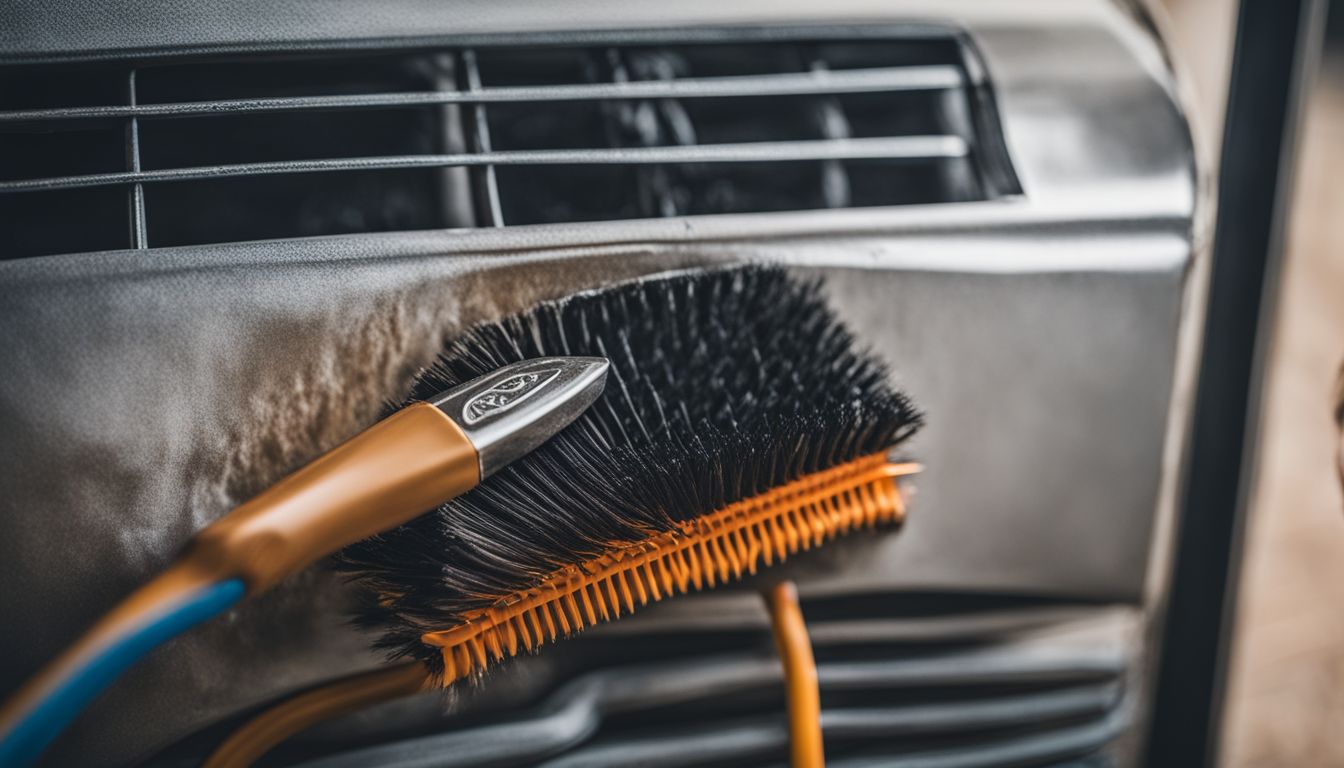
A soft brush is vital for reaching the delicate parts of your air conditioning unit. Use it to gently remove dirt and dust from the evaporator coils without causing damage. Work carefully, brushing along the fins to dislodge any trapped particles.
For best results, move smoothly in line with the coil’s design, preventing bending or misshaping them.
Make sure you clean each section thoroughly before moving on to vacuum cleaning the loosened debris. This will help ensure your air conditioner runs efficiently, keeping your home cooled and dehumidified.
With a cleaned system, you’re now ready to tackle other components that might require attention.
Step-by-Step Guide to Cleaning Your Air Conditioner

Embark on a journey to revitalise your home’s air quality with our comprehensive step-by-step guide to cleaning your air conditioner. This section will navigate you through the crucial stages of maintenance, ensuring your unit operates efficiently and effectively.
Cleaning air filters

Cleaning air filters is a crucial step in maintaining your air conditioner. It helps improve airflow and can save you money on energy bills.
- Turn off the power to your air – conditioning unit to ensure safety.
- Open the air conditioner’s cover to access the filters.
- Pull out the filters gently. Check if they are reusable or need replacing.
- If they’re reusable, take them outside or to a well – ventilated area for cleaning.
- Use a vacuum cleaner with a soft brush attachment to remove loose dust and debris from the filters.
- Rinse the filters with lukewarm water, avoiding hot water that could cause damage.
- Apply a mild detergent if the filters are very dirty. Make sure it’s a gentle cleaner to prevent damage.
- Softly scrub the filters with a soft brush or sponge, then rinse thoroughly with clean water.
- Shake excess water from the filters and let them dry completely in a shaded area before reinstalling. Never put wet filters back into your air conditioner.
- Once dry, slide the filters back into place and secure the cover of your air – conditioning unit.
Cleaning coils in your air conditioner

After tackling the air filters, it’s time to focus on the coils in your air conditioner. These parts are key for heat exchange and need regular cleaning to work well. Here’s how to clean them:
- Make sure the power to your HVAC unit is off. This keeps you safe while you work.
- Use a soft brush to gently remove dust from the condenser coil and evaporator coil. Be careful not to bend the delicate fins.
- Spray a no – rinse coil cleaner onto both coils. The foam will break down dirt and debris.
- Let the foam sit for the time stated on the cleaner’s instructions. It usually takes around 5 – 10 minutes.
- The foam and dirt will drip into the drain pan. Check that this pan isn’t blocked.
- Once done, rinse the coils with water if your cleaner needs it. Many cleaners don’t need rinsing though.
- Dry both coils with a soft cloth after cleaning, if necessary.
Cleaning other air conditioner parts

Cleaning your air conditioner involves more than just the filters and coils. Other parts also need attention to keep the unit running smoothly.
- Turn off the power to your air conditioner before starting. This is a crucial safety step to prevent electrical accidents.
- Remove the access panel on your AC unit carefully using a screwdriver.
- Use a soft brush attachment on your vacuum cleaner to gently remove dust from the fan blades.
- Clean the condenser fins with a fin comb, moving in an up-and-down motion.
- Check the drain pan located under the evaporator coil for any standing water or debris; clean it thoroughly.
- Unclog the drain line by flushing it with water; this helps prevent water damage and mold growth.
- Examine the insulation around coolant lines for any damage or wear, replacing if necessary.
- Inspect electrical connections for signs of wear or corrosion; tighten any loose wires or terminals.
- Lubricate moving parts like motors and bearings, if recommended by your manufacturer, to reduce friction and wear.
- Lastly, reattach the access panel securely after all interior cleaning is complete.
Chemical Defense: Warding Off Mold and Mildew in Your Aircon
 Mold and mildew love moist places, making your aircon a perfect home for them. To keep these unwanted guests out, use a cleaning solution designed for HVAC units. This special mixture can kill mold spores and stop new ones from growing.
Spray it on the evaporator coils and other parts inside the air conditioner where water vapour collects.
Next, replace any air purifying filters to ensure they catch mold before it starts. These filters help clean the air by trapping spores as they pass through. Making sure you swap them regularly will keep your indoor air fresh and free of mold spores.
Now that we’ve tackled chemical defenses, let’s look at some common mistakes to avoid during the cleaning process.
Common Mistakes to Avoid When Cleaning Your Air Conditioner

Maintaining your air conditioner is key to its performance, but there are pitfalls that can hinder its efficiency. Uncover essential knowledge to dodge the errors many encounter when embarking on AC maintenance, ensuring a clean system without the common blunders.
Not turning off the power

Always turn off the power before cleaning your air conditioner. This critical step prevents electrical shocks and protects you while handling the unit. Pulling the plug from the socket or switching off the circuit breaker ensures a safe environment for you to start cleaning without worrying about electricity.
Moving on, let’s talk about using the right cleaning solution to keep your aircon running smoothly.
Using the wrong cleaning solution
Using the wrong cleaning solution on your air conditioner can lead to trouble. Harsh chemicals may harm vital parts like condenser coils and expansion valves. They could eat away at the metal, causing leaks or efficiency loss.
Over time, this mistake might need costly fixes. You must pick a cleaner that’s safe for all components of your unit.
Opt for gentle, manufacturer-approved solutions designed for air-conditioning systems. Avoid any mix that contains abrasive substances or strong acids. These can damage not just the mechanics but also pose health dangers to those doing the cleaning job.
Choosing correctly will protect both your health and the air conditioner’s longevity.
Improper cleaning of blower motor and fan blades
Switching from cleaning solutions to the blower motor and fan blades requires careful attention. These parts are vital for circulating air and keeping your air conditioner working well.
Clean them wrong, and you might harm your unit or cut down on how cool the air gets. Make sure the power is off before you start. This keeps you safe from electric shocks.
Use a soft brush to gently remove dirt from the fan blades. Be gentle so you don’t bend them. Dirt can add weight and throw off balance, causing wear on the motor. For the blower motor, vacuum around it but avoid touching delicate parts inside with rough tools that could cause damage.
Instead of blowing cold air efficiently across coils, a dirty blower struggles more, using extra energy and chopping your system’s life short.
DIY vs Professional Air Conditioner Cleaning

Deciding between a DIY approach and professional air conditioner cleaning involves weighing factors like complexity and the need for specialised tools.
| DIY Air Conditioner Cleaning | Professional Air Conditioner Cleaning |
|---|---|
| Cost-effective for routine maintenance tasks. | Higher cost but includes comprehensive service. |
| Limited to surface areas and easily accessible parts. | Experts clean hard-to-reach areas and identify technical issues. |
| Regular DIY cleaning maintains airflow, reducing AC strain. | Professional cleaning may enhance the system’s overall efficiency. |
| Suitable for basic needs, especially in a less demanding environment. | Essential for complex systems, like those in Hitachi air conditioners requiring detailed maintenance. |
| Cleaning frequency depends on use and environmental factors, such as pet presence. | Professionals advise on optimal cleaning schedules tailored to specific conditions. |
| Helpful for users with time and willingness to follow instructions correctly. | Necessary when confronted with stubborn mold, mildew or mechanical faults. |
| Improves knowledge of your own AC unit’s functioning and needs. | Ensures deep-cleaning and longevity of your air conditioning system. |
Frequency of Cleaning Your Air Conditioner
Determining the optimal frequency for air conditioner maintenance hinges on several factors, but establishing a routine cleaning schedule ensures your system operates efficiently year-round.
Factors affecting cleaning frequency
The frequency of cleaning your air conditioner can help it run smoothly and use less energy. Several factors determine how often you should clean your unit.
- Use of the air conditioner: If you run your AC often, it will need cleaning more regularly to prevent build-up of dust and dirt.
- Pets in the home: Dogs and cats shed fur and dander that can clog filters quickly, requiring more frequent cleaning.
- The area around your home: Living in a dusty area or near a road with heavy traffic means more dirt can get into your AC.
- Allergies or respiratory issues: Homes with people suffering from allergies might need to clean their aircon units more often to ensure high-quality indoor air.
- Size of the AC unit: Smaller units may need to be cleaned more often as they can get overwhelmed by debris faster than larger systems.
- Type of filters used: Some filters catch more particles and therefore need cleaning or replacing more frequently.
- Presence of smokers: Homes with smokers may need to clean their air conditioners more often due to smoke particles in the air.
- Manufacturer’s advice: Companies like Hitachi suggest specific intervals for cleaning, which are good to follow.
Setting a cleaning schedule
Setting a cleaning schedule for your air conditioner helps it run better and last longer. It saves you money on energy bills and expensive repairs. Here’s how to plan your AC cleaning:
- Check your air purifying filters every month. If they’re dirty, give them a good clean to keep the air fresh and the unit efficient.
- Replace any used – up air purifying filters yearly. Fresh filters mean better performance from your AC.
- Look at the coils every season change. Clean coils help with airflow and make sure your system doesn’t work too hard.
- Plan a deep clean twice a year for the whole system, especially before heavy use times like summer or winter.
- Use FrostWash technology if you have it; many Hitachi models will auto – clean their evaporator coils.
- Adjust your schedule if you have more dust or pets at home as these can make your unit work harder and need more frequent cleaning.
- Mark your calendar for regular check – ups on other parts like fan coil units, condensers, and air handlers so nothing gets missed out.
- Consider special circumstances such as construction work nearby or pollen season which might require extra cleaning sessions.
Conclusion

Keep your air conditioner running smoothly with smart cleaning techniques. Remember, a clean AC means better health, more savings, and a cooler home. Follow this guide to tackle dirt and defend against mold for top-notch air quality.
Clean regularly for peak performance. Enjoy the fresh, cool air from your well-maintained machine!
FAQs
1. What is Chemical Harmony in air conditioning maintenance?
Chemical Harmony refers to using the right chemicals and procedures to clean your aircon, ensuring it works well with smart systems like ventilation controls, heat recovery units, and renewable-energy sources.
2. Why should I use a smart approach for cleaning my air conditioner?
A smart approach involves understanding how your aircon fits into a larger system that may include MVHR (mechanical ventilation with heat recovery), solar PV, and other energy-saving technologies; this ensures you maintain thermal efficiency without harming these components.
3. Can Chemical Harmony improve my heating and cooling systems’ energy efficiency?
Yes! Properly cleaning your system using advised methods ensures heat pumps, underfloor heating, or district heating work at their best, boosting energy efficiency overall.
4. Should I consult a professional for smart aircon cleaning?
If you’re not familiar with terms like refrigeration cycle or working fluid, it might be wise to seek help from someone knowledgeable in building automation systems to ensure safe and effective cleaning of complex setups like hot-water cylinders or fan-coil units.
5. How do I know if my home’s technology requires Chemical Harmony during an aircon clean?
Check if your home uses devices connected through Power-Over-Ethernet (PoE), Wi-Fi-enabled space heaters or FLIR cameras as part of its climate control system – these benefits from careful chemical treatment during maintenance.
6. What role does renewable energy play in Smart Aircon Cleaning practices?
Using renewable sources like solar panels contributes to an environmentally friendly ecosystem within which HVAC elements operate – tying together water heating via solar-thermal panels or ground-source heat pumps requires considering chemical impacts on the entire green setup.